




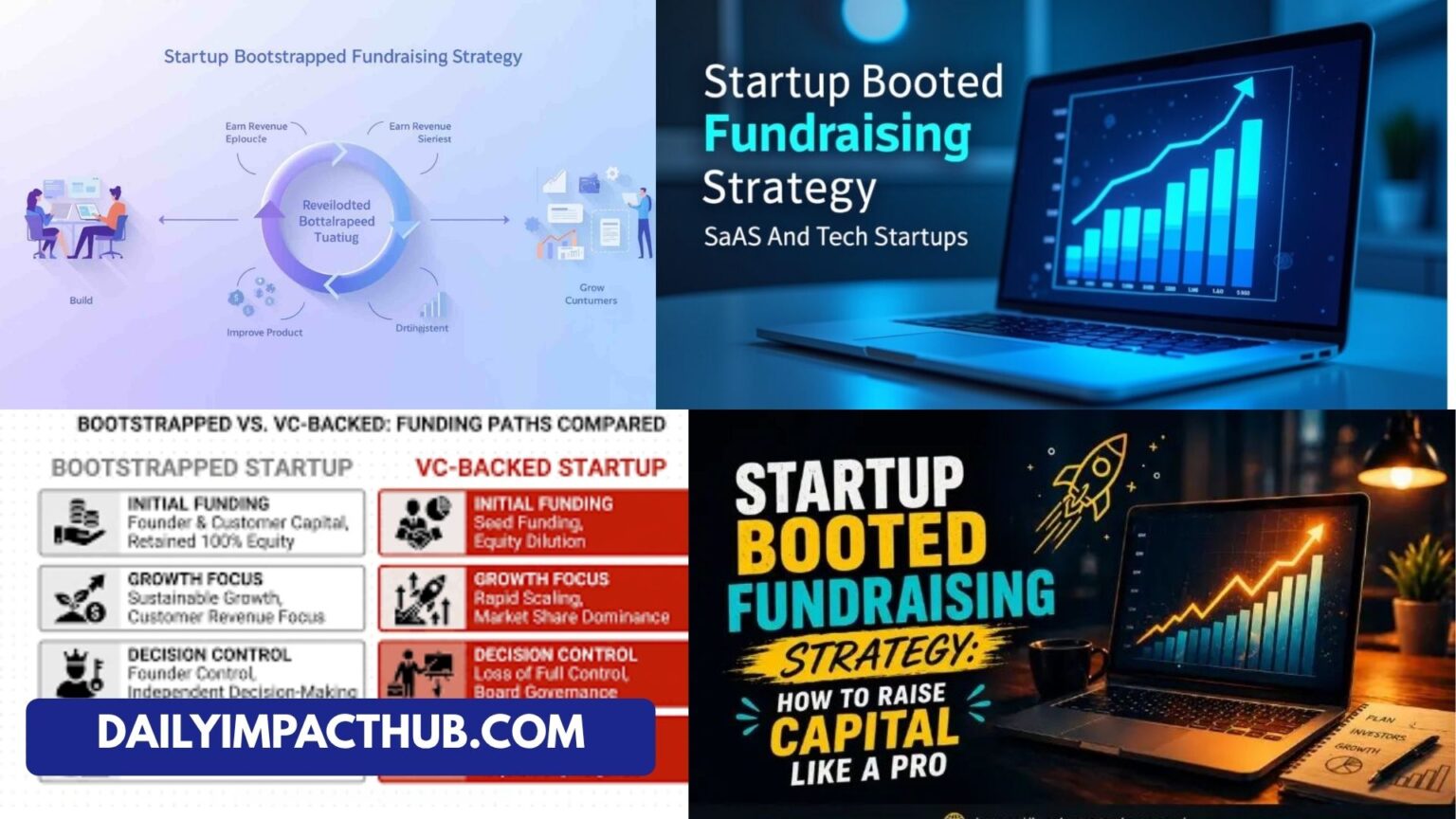
A startup bootstrapped fundraising strategy means building and growing a business using your own money or the money your business earns, instead of depending on outside investors. In simple words, you “fund yourself” step by step. Many founders choose this path because it gives them full control over their company decisions without pressure from investors.
In a bootstrapped startup, every small earning is important. Instead of raising big funding rounds, founders focus on making early sales, controlling costs, and slowly growing the business. This method is often slower, but it builds a stronger foundation because the business learns to survive on real income from the start. Many successful companies today started with this same bootstrapped fundraising strategy before becoming large global brands.
Another important point is mindset. Bootstrapping is not just about money; it is about discipline. Founders learn to spend carefully, test ideas quickly, and avoid unnecessary risks. This makes the business more stable in the long run because it is built on real demand, not just investor expectations.
How Bootstrapping Works in Real Life
A startup bootstrapped fundraising strategy usually starts very small. Founders often begin with personal savings or income from a side job. The goal is to build a minimum product, find customers, and start earning as early as possible.
Once money starts coming in, it is reinvested into the business. This cycle continues: earn → reinvest → grow. Over time, the startup becomes stronger without needing outside funding. Growth may be slower, but it is stable and controlled.
| Stage | Action | Goal |
|---|---|---|
| Stage 1 | Use personal savings | Start idea |
| Stage 2 | Build MVP | Test product |
| Stage 3 | Get first customers | Validate demand |
| Stage 4 | Reinvest profit | Grow slowly |
| Stage 5 | Scale gradually | Build stability |
This model helps founders understand real market demand before scaling too fast. It reduces risk because every step is backed by real revenue.
Best Bootstrapped Fundraising Methods
There are several smart ways to follow a startup bootstrapped fundraising strategy. One of the most common is selling early. Instead of waiting for a perfect product, founders pre-sell or offer services to generate quick cash flow.
Another method is starting as a service business. Many successful startups first offered freelance or consulting services to fund their product development. This brings income while still building the main idea.
| Method | How It Works | Benefit |
|---|---|---|
| Pre-selling | Sell before full product | Early cash flow |
| Freelancing | Offer services first | Fast income |
| Small reinvestment | Use profits for growth | No debt or investors |
| Partnerships | Share resources | Lower cost |
Other important methods include low-cost marketing like SEO and social media. These help bring customers without spending too much money, which is very important in bootstrapping.
Scaling Without Investors
Scaling a startup bootstrapped fundraising strategy business requires patience and smart planning. Instead of growing fast with investor money, you grow based on profits. This makes the business more stable but slower.
Founders usually focus on improving one thing at a time. For example, first improving product quality, then customer experience, and then marketing. This step-by-step approach avoids chaos and helps maintain control.
Many bootstrapped startups also rely on automation tools to save time and cost. This allows small teams to do big work without hiring too many people early on.
Challenges and Solutions
A big challenge in a startup bootstrapped fundraising strategy is limited money. Since there is no external funding, founders must carefully manage every expense. This can slow down growth and create pressure.
Another challenge is burnout. Founders often handle multiple roles like marketing, development, and sales. This can become overwhelming without proper balance.
| Challenge | Simple Solution |
|---|---|
| Low budget | Focus on essential features only |
| Slow growth | Reinvest profits wisely |
| High workload | Use freelancers or automation |
| Market competition | Focus on niche audience |
Even with these challenges, many founders succeed because they stay focused and patient. Bootstrapping builds strong problem-solving skills over time.
Bootstrapped vs Funded Startups
A startup bootstrapped fundraising strategy is very different from venture-funded startups. Bootstrapped businesses grow using their own money, while funded startups use investor capital to scale quickly.
Bootstrapped startups have full control but slower growth. Funded startups grow fast but often face pressure from investors to deliver quick results.\
| Factor | Bootstrapped | Funded |
|---|---|---|
| Control | Full control | Shared control |
| Growth speed | Slow & steady | Fast |
| Risk | Low financial risk | High pressure |
| Profit focus | Early profit | Growth first |
Choosing between them depends on your goals. If you want independence, bootstrapping is better. If you want fast scaling, funding may be required.
Advanced Growth Tips
To improve a startup bootstrapped fundraising strategy, founders must think smart. One powerful method is focusing on a small niche first. Instead of targeting everyone, serve a specific audience deeply.
Another important tip is building strong customer relationships. Happy customers bring repeat sales and referrals, which reduces marketing cost.
Some founders also use content marketing and SEO to attract free traffic. This is one of the most powerful long-term strategies for bootstrapped startups.
Key advanced ideas include:
- Focus on one strong product first
- Reinvest profits carefully
- Build brand trust early
- Use automation tools
- Track every expense and result
Conclusion
A startup bootstrapped fundraising strategy is not the fastest way to grow, but it is one of the most stable and safe ways to build a business. It teaches discipline, patience, and real market understanding.
Many successful companies started with no investors at all. They grew slowly, learned from customers, and built strong foundations before scaling. If you value control and long-term stability, bootstrapping is a powerful path.
FAQs (100 words each)
1. What is a startup bootstrapped fundraising strategy?
It is a method of starting and growing a business using personal savings or business earnings instead of investor funding. The founder reinvests profits back into the company. This approach helps maintain full control and reduces dependency on external investors. It is slower than funded growth but builds stronger financial discipline. Many startups begin this way to test ideas before scaling. It also reduces risk because spending is controlled carefully. Bootstrapping focuses on real customer demand instead of pressure from investors, making it a stable long-term business model for beginners and experienced founders alike.
2. Is bootstrapping better than raising funds?
It depends on your goals. Bootstrapping gives full control and lower risk, but growth is slower. Fundraising allows faster expansion but brings investor pressure and shared control. If you want independence and steady growth, bootstrapping is better. If you want quick scaling and large market reach, funding may be more suitable. Many startups actually combine both methods over time. The choice depends on your product, market, and long-term vision. There is no perfect answer, only what fits your business needs best.
3. How do bootstrapped startups get customers?
Bootstrapped startups usually focus on low-cost marketing like SEO, social media, and word-of-mouth. They often start with a small niche audience and solve a specific problem. Many also offer free trials or early discounts to attract first users. Some founders use personal networks or freelance services to get initial customers. The key is to start small and build trust. Once customers are happy, they bring more users through referrals. This helps grow the business without spending heavily on ads or investors.
4. What are the biggest risks of bootstrapping?
The main risks include slow growth, limited cash flow, and founder burnout. Since there is no external funding, every expense must be carefully planned. This can make scaling difficult in competitive markets. Founders also often take on multiple roles, which can lead to stress. However, these risks can be managed by focusing on essentials, using automation tools, and reinvesting profits wisely. Many successful businesses started this way, proving that careful planning can reduce most risks in bootstrapping.
5. Can a bootstrapped startup become very large?
Yes, many large companies started with a bootstrapped fundraising strategy. They grew slowly at first, focused on real customers, and reinvested profits into expansion. Over time, this created strong financial stability and loyal users. Some companies later chose to raise funds, while others remained independent. The key is patience and consistent growth. Bootstrapping does not limit success; it only changes the speed. With the right strategy, a bootstrapped startup can become a global business without depending on investors.
Read more :Kody Brown New Wife Amber Smith: Truth Behind the Rumors